%20(1)_20220516165429_0.png&w=256&q=75&dpl=dpl_BY3MvZKRgduHvGnPbu36dAUCphUH)
 Chat With Us
Sunstone School of Computer Applications
New-Age MCA for The Jobs of 2030
-
20+ Partner Campuses
-
2000+ Active MCA Students
-
6 Month Internship/ Projects
5 MCA Career Tracks
Key Offerings
 30+ exclusive sessions by CTOs, tech leaders, startup founders, and hiring experts.
 Build a professional GitHub portfolio with 300+ LeetCode problems solved.
 350+ hours of structured coding and DSA training.
 Hands-on experience with 2 AI tools every year including ChatGPT, Gemini, and Grok.
 5 industry-recognised certifications including Full Stack, AI & ML, AWS Cloud, Cyber Security, and Data Science.
 100+ hours of structured interview preparation with mock interviews and coding rounds.
 Seed funding support and mentorship for budding entrepreneurs through Launchpad.
 Curriculum updated every 6 months with industry inputs to stay relevant and job-ready.
Our Success Stories
Placements That Speak for Themselves
Sunstone students graduate into roles across top tech companies, startups, and global firms — backed by a hiring network built over years of industry partnerships.

8
LPA Average Package (Top 20% Students)
26
LPA Highest Package
1200+
Hiring Partners
7,500+
Students Placed
MCA Eligibility Criteria
- Passed class 12th with maths
- Graduate in BCA or any other related field
- 50% marks in graduation
MCA Fee Details
MCA fees range from ₹1.80 lakh to ₹4.30 lakh per year, depending on the campus and university partner. Use the fee calculator below to view exact campus-wise fees and explore financial assistance options.
0 Cost EMI available
Up to 100% scholarship available
Get 200+ assured opportunities with Placement Opportunity Program
Calculate fees
*Terms & conditions apply
 Shortlist Colleges
Choose from 20+ top colleges & make your application process easier!
Explore career opportunities with 1,200+ recruiters







Learn from Industry Experts
Learn directly from experts who don’t just teach but build, lead, and hire in the real world.
10+Industry Experts 30+Expert Sessions
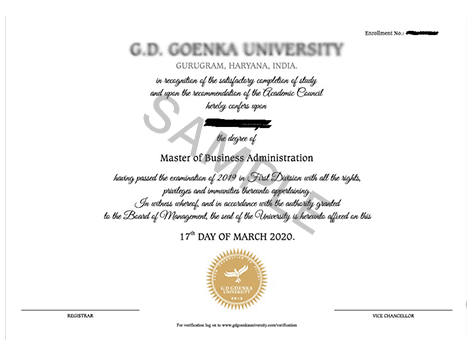
Industry Recognised Credentials
- Credential 1
- Credential 2
MCA Degree
- Earn a UGC-recognised/AICTE-approved degree
- Master the principles of computer applications
- Equip yourself with industry-relevant skills
Life at Sunstone
MCA Diaries
Know more about MCA programs, syllabus, and career prospects with our blogs
Important Personal Interview Questions for MCA Freshers in 2025
By Nisha Gupta
12 Apr,2026How to Start a Career in Blockchain Technology?
By Nisha Gupta
13 Apr,2026MCA in Machine Learning: Course, Admission, Syllabus, Colleges, Jobs, Salary
By Nisha Gupta
14 Apr,2026Why is MCA necessary after BCA?
By Nisha Gupta
16 Apr,2026
MCA (Master of Computer Applications) is a 2-year postgraduate degree in software development and computer applications, open to BCA, B.Sc (CS/IT), B.Tech/BE (CSE/IT), or equivalent graduates — non-tech graduates can qualify via a 1-month bridge course. At Sunstone, it adds five AI-integrated career tracks, with total fees ranging from approximately ₹1.80 lakh to ₹4.30 lakh depending on campus.
What is MCA?
MCA (Master of Computer Applications) is a 2-year, full-time postgraduate degree focused on software development, programming, and computer applications — the standard postgraduate route for BCA and computer science graduates who want to go deeper into technical roles. Unlike an MBA or MTech, MCA is squarely focused on application development, systems design, and hands-on coding rather than management theory or core engineering.
Sunstone's New-Age MCA builds on this core structure with an AI-integrated curriculum, five specialised career tracks, and hands-on exposure to tools like ChatGPT, Gemini, and Grok integrated across every semester — not taught as a separate subject. Students choose their specialisation in Year 2 based on interest and career goals. Demand for this kind of specialised talent is real: Nasscom's State of Data Science & AI Skills in India report projects demand for data science and AI professionals in the country to cross 1 million by 2026, against a current supply gap of roughly 51% — a market MCA graduates with a relevant specialisation are positioned to enter directly.
MCA Subjects and Syllabus
MCA covers advanced computer applications, programming, and systems subjects, with specialisation electives concentrated in Year 2.
| Year | Core Subjects Covered |
|---|---|
| Year 1 | Java Programming, SQL/MySQL, Data Structures, Git and GitOps, HTML/CSS, JavaScript, Database Management Systems |
| Year 2 | Specialisation subjects aligned to the student's chosen career track (AI & ML, Full Stack, Cloud Computing, Cyber Security, or Data Science), Cloud (AWS & Azure), plus a final-year capstone project |
Non-tech-background graduates can join via a 1-month bridge course covering foundational programming and computer science concepts before the core curriculum begins.
For the complete semester-wise breakdown, see the full MCA syllabus and subjects guide.
MCA Specialisations and Career Tracks
Sunstone structures MCA specialisation around five in-demand career tracks, chosen in Year 2:
- Artificial Intelligence & Machine Learning — Python, TensorFlow, and PyTorch for building AI models. See MCA in AI & Machine Learning for a deeper look at this track.
- Full Stack Web Development — React, Node.js, REST APIs, and deployment. See MCA in Full Stack Development.
- AWS Cloud Computing — AWS infrastructure, Docker, Kubernetes, and DevOps. See MCA in Cloud Computing.
- Cyber Security — ethical hacking, network security, and SOC operations. See MCA in Cyber Security & Forensics.
- Data Science or Data Engineering — data pipelines, visualisation, SQL, Spark, and AWS Redshift. See MCA in Data Science.
Each track leads to an industry-recognised certification, so the specialisation shows up on a resume as a credential, not just a course title.
Top MCA Colleges in India
Sunstone partners with 20+ universities across India offering the New-Age MCA programme, spanning major cities including Pune, Bangalore, Delhi NCR, Hyderabad, Mumbai, and Kolkata. Each partner campus follows the same core curriculum and five career tracks, with placement support pooled across the full hiring network.
Explore college-specific details: best MCA colleges in India, top MCA colleges in Bangalore, top MCA colleges in Pune, and top MCA colleges in Delhi NCR.
MCA Eligibility and Entrance Exams
To be eligible for MCA admission, candidates typically need a BCA, B.Sc (Computer Science/IT), B.Tech/BE (CSE/IT), or an equivalent graduate degree with Mathematics as a subject at 12th or graduation level. Unlike BCA or BBA, MCA is not open to any-stream graduates by default — it assumes some computing or mathematics background. Sunstone's New-Age MCA extends access to non-tech-background graduates through a 1-month bridge course that covers foundational programming before the core curriculum begins.
Entrance exam requirements vary by partner campus rather than following a single rule. Some universities conduct their own entrance test, others require a recognised national-level exam, and students applying in Maharashtra will often encounter the MAH MCA CET, a dedicated state-level entrance exam for MCA admission. Check the specific requirement for your shortlisted campus before applying.
For exam-specific detail, see the MAH MCA CET eligibility and syllabus guide, MAH MCA CET exam pattern, and the general MCA entrance exam guide. For the full eligibility breakdown, see MCA eligibility criteria.
Doing MCA After BCA
BCA graduates are one of the most common and best-suited applicant groups for MCA, since the BCA curriculum already covers the programming and computer science foundation MCA builds on. Many universities also offer an integrated BCA-MCA track for students who plan this path from the start of their undergraduate degree.
See why MCA after BCA makes sense and the BCA-MCA integrated course guide for how the combined path works.
MCA Fees, Scholarships, and Placements
MCA total course fees at Sunstone range from approximately ₹1.80 lakh to ₹4.30 lakh across partner campuses, depending on the university partner. Use the fee calculator on this page for a campus-wise breakdown. Zero Cost EMI and scholarship options are available based on SAT (Scholarship Admission Test) score.
What's not gated is the outcome data: Sunstone MCA students get access to a hiring network built across placement partners spanning top tech companies, startups, and global firms, with placement preparation starting from day one.
MCA vs Other Postgraduate Options
MCA is often weighed against other postgraduate paths for tech and computer science graduates:
- See MCA vs MTech if you're weighing application development against core engineering research
- See MCA vs MBA if you're weighing technical specialisation against management
- See MCA vs MSc IT if you're comparing it to a more theory-focused computing postgraduate route
What Comes After MCA?
MCA graduates typically move into roles as software developers, full stack developers, data analysts, cloud engineers, or cybersecurity analysts. The degree is widely recognised across both product-based and service-based IT companies as a direct route into technical roles without requiring a further postgraduate qualification.
Read more in MCA salary, jobs, and scope in India and career options after MCA.
MCA Summary
- MCA is a 2-year postgraduate degree in computer applications and software development — open to BCA, B.Sc (CS/IT), B.Tech/BE (CSE/IT), or equivalent graduates, with a bridge course available for non-tech backgrounds.
- Core subjects span programming, databases, and systems design, with specialisation chosen in Year 2.
- Sunstone's New-Age MCA adds 5 career tracks (AI & ML, Full Stack, Cloud, Cyber Security, Data Science) and hands-on AI tool exposure every semester.
- Entrance exam requirements vary by campus — some use their own test, others a national exam, and Maharashtra campuses often use the MAH MCA CET.
- Total fees range from approximately ₹1.80 lakh to ₹4.30 lakh depending on campus.
MCA Summary
- New Age MCA, or Master of Computer Applications, is a 2-year postgraduate tech program focused on coding, AI-integrated development, and building real-world software solutions from day one.
- The program covers 5 career tracks — Artificial Intelligence & Machine Learning, Full Stack Web Development, AWS Cloud Computing, Cyber Security, and Data Science or Data Engineering.
- Learning is supported by 30+ exclusive sessions from CTOs, software developers, startup founders, and tech hiring experts with real industry experience.
- Hands-on experience with 2 AI tools every year including ChatGPT, Google Gemini, Claude, and Grok — integrated across every semester, not taught as a separate subject.
- MCA fees range from ₹1.80 lakh to ₹4.30 lakh per year with Zero Cost EMI and scholarship options available based on SAT score.
Frequently Asked Question
- What are the details of the MCA course?
MCA (Master of Computer Applications) is a 2-year postgraduate program focused on software development, programming, and computer applications. Sunstone's MCA adds five career tracks (AI & ML, Full Stack, Cloud, Cyber Security, Data Science), industry certifications, and hands-on AI tool exposure every semester.
- What are the MCA course fees at Sunstone?
MCA total course fees at Sunstone range from approximately ₹1.80 lakh to ₹4.30 lakh across partner campuses. Exact fees vary by campus use the fee calculator on this page for a campus-wise breakdown. Zero Cost EMI and scholarship options are available based on SAT score.
- What is the eligibility for MCA admission?
MCA typically requires a BCA, B.Sc (Computer Science/IT), B.Tech/BE (CSE/IT), or an equivalent graduate degree with Mathematics as a subject. Non-tech-background graduates can qualify through Sunstone's 1-month bridge course, which covers foundational programming before the core curriculum begins.
- Is there an entrance exam for MCA?
It depends on the campus. Some universities conduct their own entrance test, others require a national-level exam, and students in Maharashtra will often encounter the MAH MCA CET, a dedicated state-level entrance exam for MCA admission. Check the specific requirement for your shortlisted campus.
- Can I do MCA after BA?
Generally not directly, unless your BA included Mathematics as a subject MCA typically requires a BCA, B.Sc (CS/IT), B.Tech/BE (CSE/IT), or an equivalent degree with a Mathematics background. Sunstone's 1-month bridge course extends eligibility to non-tech-background graduates, including some BA graduates, by covering foundational programming before the core curriculum begins. Confirm your specific eligibility with the campus you're applying to.
- How long is the MCA course?
The MCA course in India is usually two years long and includes classroom learning, labs, and project work.
- Can non-tech-background graduates pursue MCA?
Yes. Sunstone offers a 1-month bridge course for students from non-tech backgrounds, covering foundational programming and computer science concepts before the core MCA curriculum begins.
- What is the difference between MCA and MTech?
MCA is focused on application development, programming, and computer applications, while MTech is a core engineering degree with a stronger emphasis on technical research and specialisation. MCA suits students who want to enter software/IT roles directly; MTech suits those targeting deeper engineering or research-oriented careers.
- Is MCA better than MBA?
MCA and MBA serve different career paths MCA builds deep technical and programming skills for software/IT roles, while MBA builds management and business skills for leadership roles. The better choice depends on whether you want to specialise technically (MCA) or move into management (MBA).
- What are the placement opportunities after MCA?
MCA graduates from Sunstone gain access to a hiring network spanning top tech companies, startups, and global firms, with placement preparation and mock interviews starting from day one of the program.
APPLY FOR UG AND PG PROGRAMS
Enter a world of
Possibilities